An insight full look into how racism manifests itself through a city I have grown up and called home. Having lived in Kampala, specifically from kololo hill, to Malcom x avenue, to Mbuya hill, Kibuli and then to Buziga it really is as the author presents.
It’s even more apparent if you look at where the city’s sewarage system covers (only the 2 Hills, Kololo and Nakasero hills that were the white areas)
MA Graphic Design
-
The racism behind Kampala
-
Participatory Design: Annotated Bibliography
Introduction
A few books, journals and articles I read and annotated on my quest to understand the Participatory Design process, methodology, and how aspects of it can be applied in a graphic design context.
Spinuzzi, C. (2005, May). The Methodology of Participatory Design. Technical Communication, 52(2), 163-174 (12)
The text aims to provide an introduction to Participatory Design by presenting a historical and methodological grounding for understanding it as a research methodology; its research designs, methods, criteria, and limitations from the point of view of a technical communicator. That being said the text provides a good starting point in understanding the WHAT and HOW of participatory design methodology with discussion about some practical applications that provide context.
Clay argues that Participatory Design is a way to understand knowledge by doing, this knowledge tends to be tacit in nature and is a key focus of exploration in Participatory design; He also puts forward that Participatory design’s methodology is derived from participatory action research i.e. practical interventionist investigations and parallel theoretical reflection emphasising co-research and co-design where researcher-designers come to a conclusion in conjunction with users.
Sanders, E. B.-N. (2002). User-centred to Participatory Design Approaches. In J. Frascara, Design and the Social Sciences: Making Connections (pp. 1-7). Taylor & Francis Books Ltd
Sanders offers, that the Post design movement/mind-set is characterised by an attitude shift from designing for users to designing with users.
I particularly find this chapter interesting because it provides an idea of how the role of the designer is changing and the reasons for that change. She proposes that the reasons for the attitude shift are; the participatory culture of today and new tools that focus on accessing experiences as opposed to the Traditional design research methods that were focused primarily on observational research focused more on what people say and think.
Sanders has produced many influential texts, used today for analysing the link between design and the social sciences including some mentioned in this bibliography.
-

Reflective Statement
Reflection on my research methods
This blog has surprisingly been the single most demanding experience I have had to endure-in particular having to critically evaluate my own work, managing and planning my time when collecting information and spending large amounts of time reading articles that end up not being relevant to what am trying to achieve. If anything, the experience has left me humbled with a better appreciation for efficient planning and organisation.
I started out with little to no clue on what or how I would approach the topic Participatory Design Processes that I had set out to research since my knowledge of the subject was from a project I was attached to as a graphic designer; I was curious to know more about the subject, how it worked and possible practical applications that I could look into for my development and I think from the work I did in the bibliography and the critical assessment, I got most if not more insight into the origins, principles and ideas that underpin the subject matter.
As for practical applications I found a mixed bag of practical applications of which are usually carried out on a large scale to solve some rather complex problems facing groups of people for example, Alejandro Aravena is solving global challenge of urbanization with participation from the communities. From my understanding of the research these are sizeable projects to implement, this detail lead me to question whether or not I had made a mistake in my initial focus on Participatory design processes plus I could not quite figure out how to connect this to my practical work but I still managed to get much needed context not only of the topics but the research helped to jump start the process of inquiry into what else was possible with greater emphasis on practical applications for my practice work.
What I think helped the most was the opportunity to pick a keyword for the practice 1 assignment. The broader research gave me the needed spark to look into more contemporary works for example Modern design and the latest in visual design languages.
Research Findings
Through my research I effectively expended my knowledge and understanding of participatory design processes from both a theoretical and practical perspective. This was achieved by reading journals on the subject and viewing talks of practitioners who are at the forefront of this approach to find community backed solutions to problems.
The most useful research I have conducted has to be that of visual languages that emphasis clarity since this coincides with my own work and being able to take the time to explore this particular topic has helped to inform my own design work since principles like being Authentically digital and Do more with less; and influences such as the Bauhaus philosophy of stripping away superfluous decorations so as to focus on the essence of the functional which is the hallmark of the New Typography-Modern Design Movement are current ideas that have very practical uses.
-
Exploration of composition
I thought I would take the time to do some research on some visual fundamentals that underpin most if not all aspects of design i.e. the visual structure and organization of elements within a design; particularly the process of combining distinct parts or elements to form a whole. some elements of composition are:
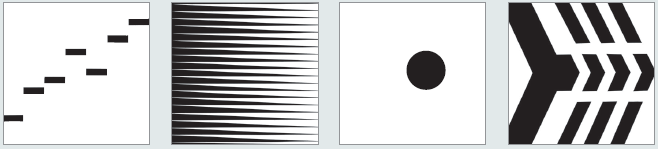 Positive and negative space
Positive space being a form or object that, to the eye, appears to exist. while Negative space is everything else around or within an object that is to say, the “empty” space left over.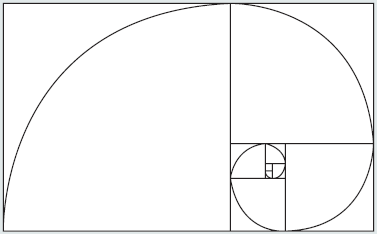
Fibonacci spiral: Each time a square is taken from the section, a smaller rectangle remains with the same proportions as the original. The spiral (also known as the golden ratio) can be used to create a proportional and harmonious composition. Point and line
Points exist in their own right as points in space (dots), but are also the start of lines while a line is a pathway between any two points. It can be straight, curved, thick, thin, horizontal, diagonal, jagged, solid, or broken.Figure and ground
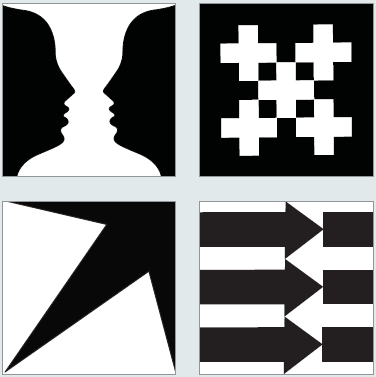
- Figure ground relationships produce different effects that confuse the eye. For example, the Rubin vase (top left) relies upon a visual confusion between figure and ground, so that the eye sees either faces or a vase.
A form is always experienced in relation to the space it occupies and to other forms that may be present in the format.
The law of closure
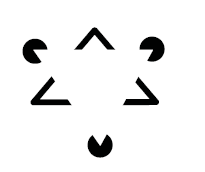 The law argues that we tend to “close” or complete lines or objects that are not, in fact, closed.
 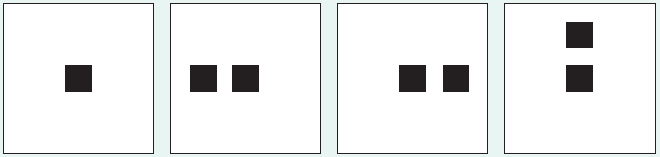 Symmetry
A spatial relationship between elements, and specifically to a situation where the elements in a layout are centred, having equal space to the left and right, or above and below them. while Asymmetry is a composition where elements are juxtaposed and do not mirror the other forms on the page.layout
The organization of disparate material that makes up the content of a design. the aim of this is to present information in a logical, coherent way, and to make the important elements stand out.
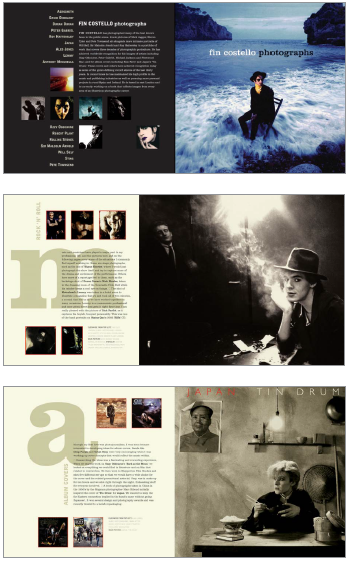
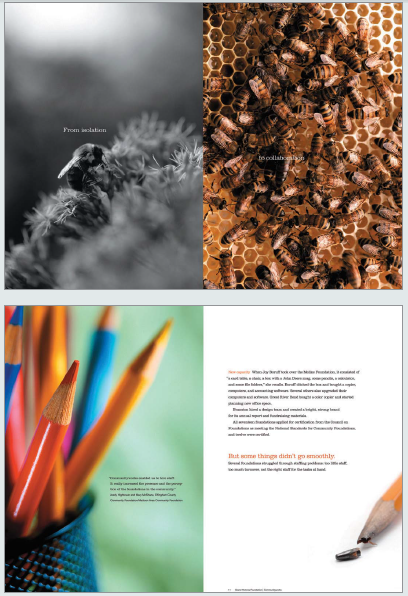
Pace and contrast
vital qualities for maintaining a reader’s interest in a design by providing variety.
Coordination and identity
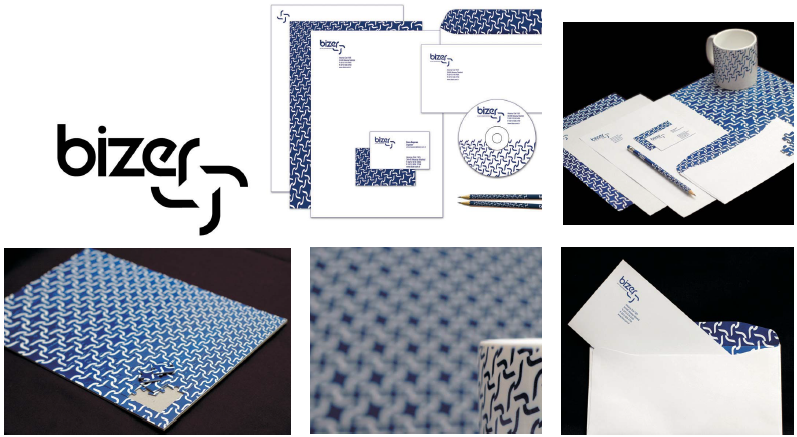
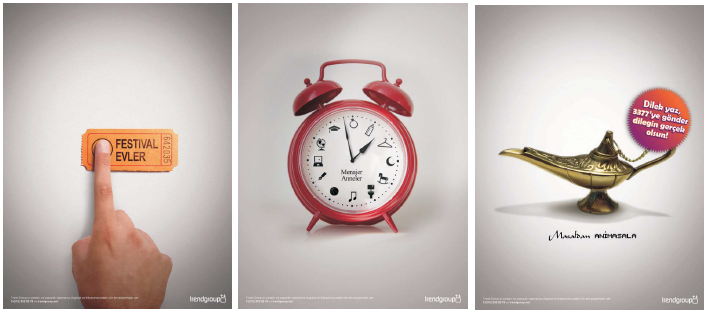
Few things are designed to work as standalone pieces. Look at a successful corporate identity: the logo, advertising campaigns, direct mail pieces, and annual report all have common design elements, binding them together and identifying them as part of the same set.
components of coordination and identity:
- Unity
- Central themes
- Schematic
- Minimalist
- Unity through diversity
 Photography and illustration
A well-coordinated look is a hallmark of good design, and the way we plan, edit, and incorporate images significantly affects the outcome.With this research, I can move on with the much-needed knowledge and understanding of what constitutes a good composition. Am actually surprised that I found some concepts I didn’t quite understand but can now see their significance for example: the use of Symmetry in compositions (I tend to favour asymmetrical design and layouts).
References:
Dabner, D., Calvert, S., & Casey, A. (2012). The New Graphic Design School A Foundation Course in Principles and Practice. Wiley.
-
Material design
With advancements in technology and an increasingly connected mobile world, designers today have to deal with a growing number of tools which require new skillsets.
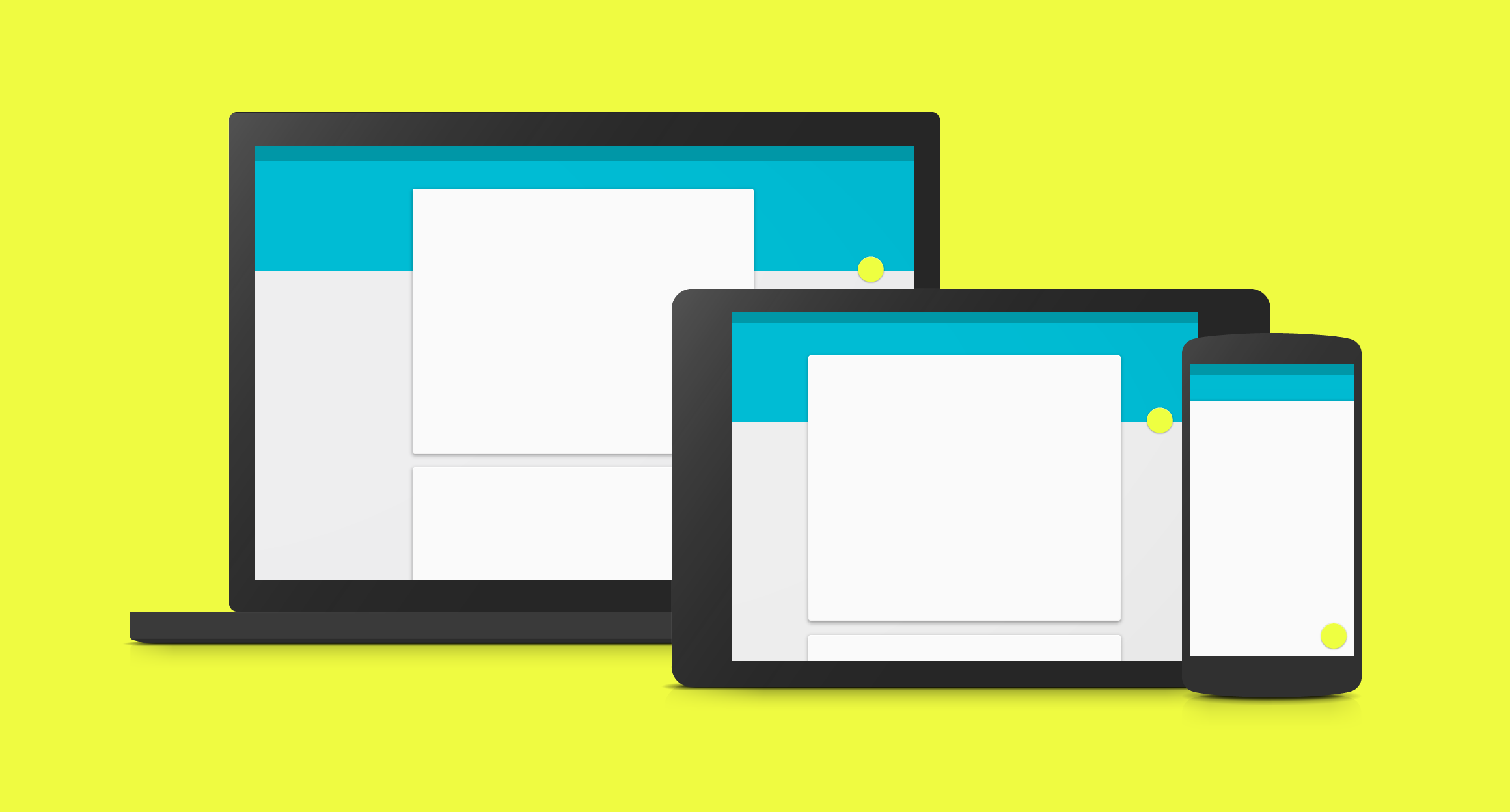
my research into visual languages lead me to the visual language developed by Google for the Android operating system called ‘Material Design’. The visual language synthesizes the classic principles of good design with the innovation and possibility of technology and science with a single underlying system that allows for a unified experience across platforms and device sizes.
Material design is based on 3 principles:

- Material is the metaphor: The unifying theory of a rationalized space and a system of motion
- Bold, graphic, intentional: Elements of print-based design—typography, grids, space, scale, color, and use of imagery—guide visual treatments
- Motion provides meaning: Primary user actions are inflection points that initiate motion, transforming the whole design
References:
Material design. (n.d.). Retrieved January 5, 2015, from google.com: http://www.google.com/design/spec/material-design/introduction.html#introduction-goals
-
Modern Design
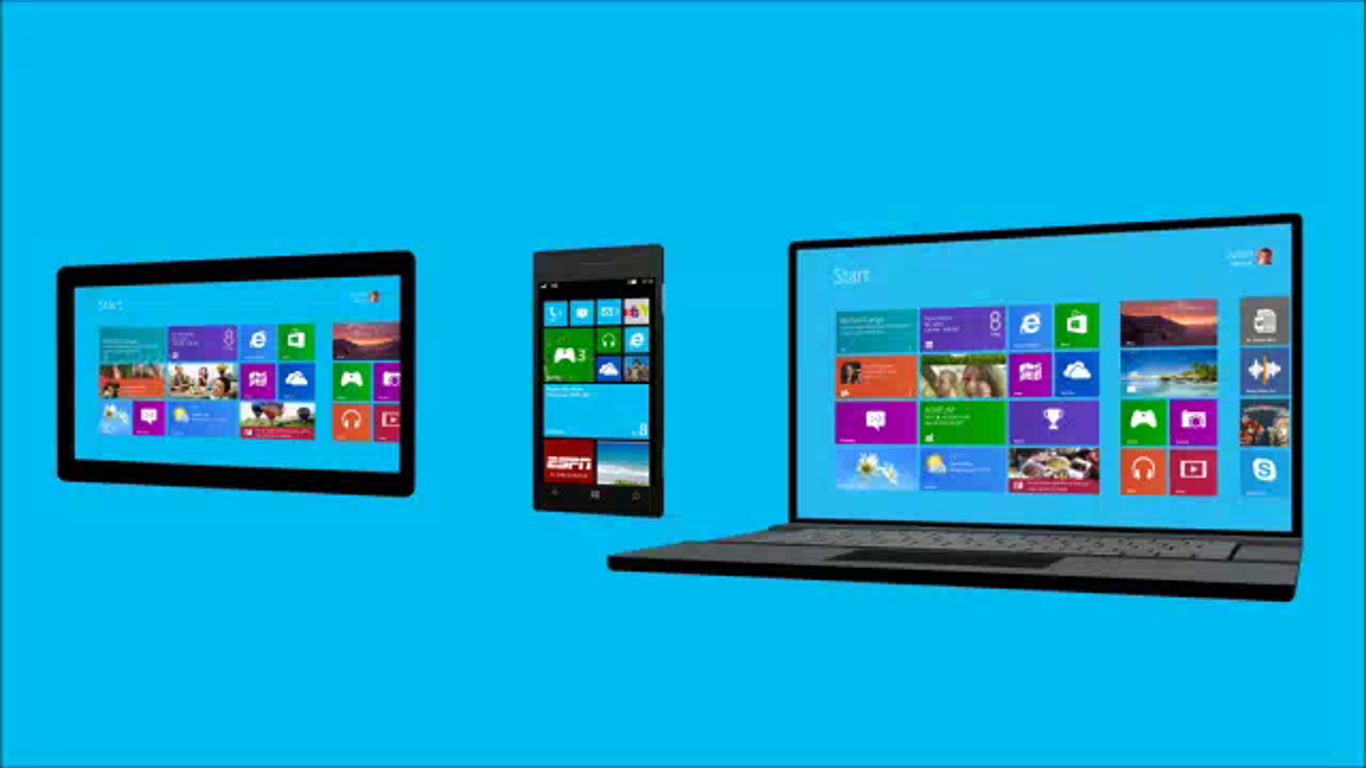
During my research into visual Languages that emphasize clarity, I came across an article on microsoft.com about Modern design at Microsoft. Context: Microsoft has united around design principles that are modern, intuitive, and implemented through a playful visual language that extends into their entire product portfolio. These principles are characterized by vibrant and dynamic typography, color, and motion while staying away from ornamentation or decoration. I found this article and the general Ideas presented very interesting. With lots of questions about certain aspects of the emergence of modern design, I investigated further:
- What influenced this visual language?
- Fundamental principles and how are they used in practice?
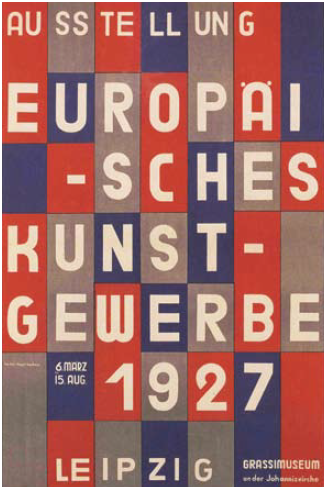
Herbert Bayer Poster for exhibition of European arts and crafts in Leipzig, 1927. In February 2010 because of how complex and ubiquitous technology was in our lives, Microsoft was determined to refocus on people and place a greater emphasis on consistency of design across its products and services into a unified user experience. In order to achieve this, Microsoft sort to establish principles for this new approach based on influences like the Bauhaus philosophy of stripping away superfluous decorations so as to focus on the essence of the functional which is the hallmark of the New Typography-Modern Design Movement popularized by practitioners like Herbert Bayer and Jan Tschichold.

The second influence came from the famed International Typographic Style (or Swiss Style) that emphasizes cleanliness, readability and objectivity. The hallmarks of Swiss Style are great typography, a focus on layout and grid systems, and the use of bold, flat color. It’s a style that is seen in way-finding signage at airports and other transportation hubs.
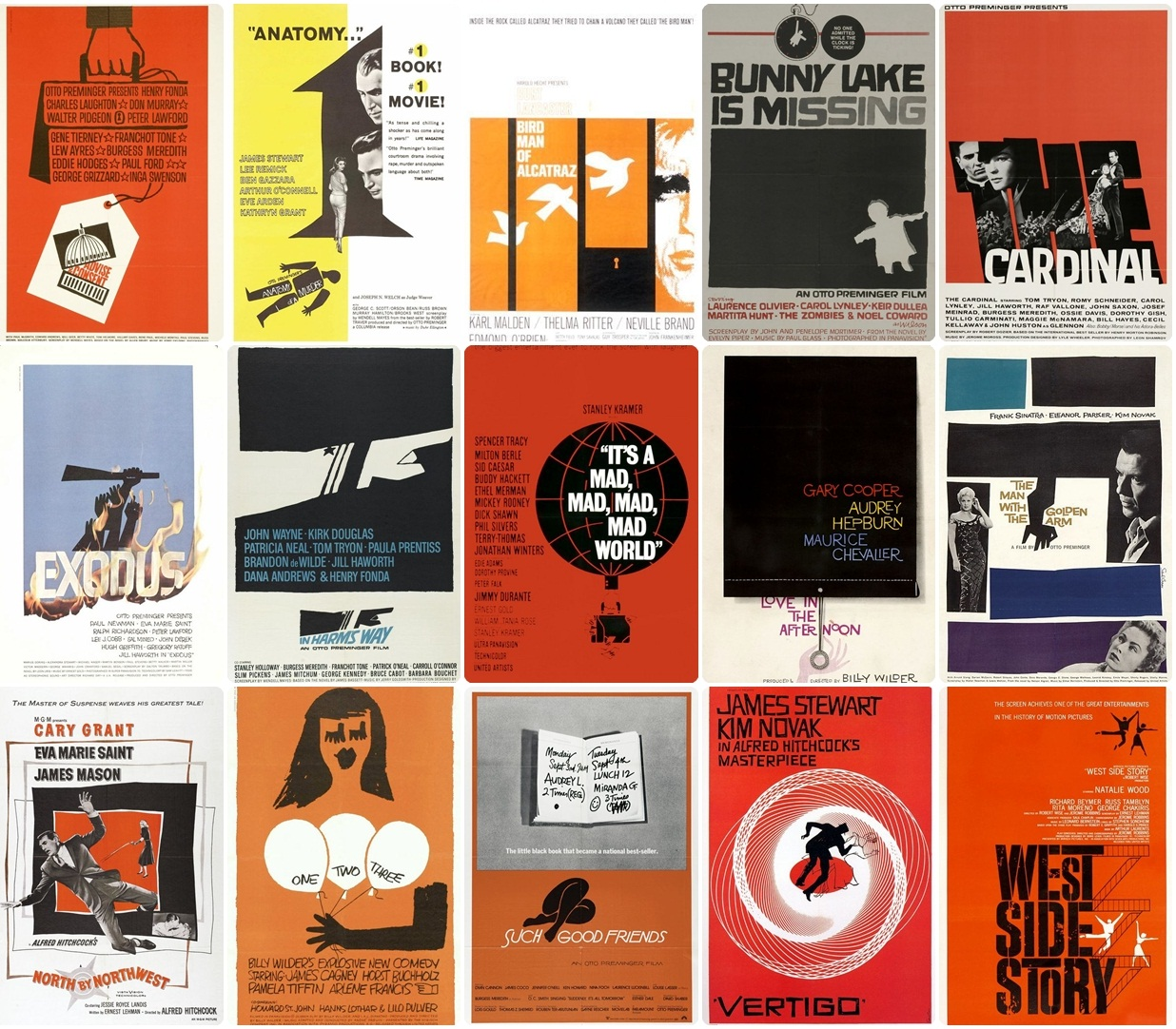
The Last and final influence was the field of Motion design where designers like Saul Bass best known for his design of motion picture title sequences that set an emotional stage for films, film posters, and corporate logos.
Microsoft used these 3 influences to come up with their 5 design principles for the Modern design visual language namely:
- Pride in craftsmanship: Devoting time and energy to small things that many will see often.
- Fast and fluid: Products that feel immersive and responsive are compelling, delightful and bring the interface to life.
- Authentically digital: Going beyond the rules and properties of the physical world to create new and exciting possibilities in a purely digital realm.
- Do more with less: focus on only what is needed — reducing to the essence and celebrating content.
- Win as one: A series of consistent experiences.
I am particularly fascinated by how Four hundred designers from across the company, representing every design discipline at Microsoft, gathered to discuss the principles and share how they were applied. This if anything demonstrates the idea that we should involve as many people in idea generation and development as possible (Ind, Fuller, & Trevail, 2012) because the result of the work Microsoft undertook to create this very unique visual language truly demonstrates how design based on the pursuit of visual Clarity and minimalism make for good inspiring design.
My aim going forward is to utilize the principles Microsoft developed in order to develop my own visual language.
References:
Clayton, S. (n.d.). Modern Design at Microsoft. Retrieved January 5, 2015, from Microsoft: http://www.microsoft.com/en-us/stories/design/
Design at Microsoft. (2013). Retrieved january 5, 2015, from microsoft.com: http://www.microsoft.com/design/
Armstrong, H. (2009). Graphic Design Theory: Readings from the Field. Ne w York: Princeton Architectural Press.
Ind, N., Fuller, C., & Trevail, C. (2012). Brand Together : How Co-Creation Generates Innovation and Re-energizes Brands. Kogan Page.
-
Visual language

An image that dramatizes and communicates an idea presupposes the use of a visual language. Just as people can ‘verbalize’ their thinking, they can ‘visualize’ it.
What?
A diagram, a map, and a painting are all examples of uses of visual language. Its structural units include line, shape, color, form, motion, texture, pattern, direction, orientation, scale, angle, space and proportion.
The elements in an image represent concepts in a spatial context, rather than the linear form used for words. Speech and visual communication are parallel and often interdependent means by which humans exchange information.
The London Underground map
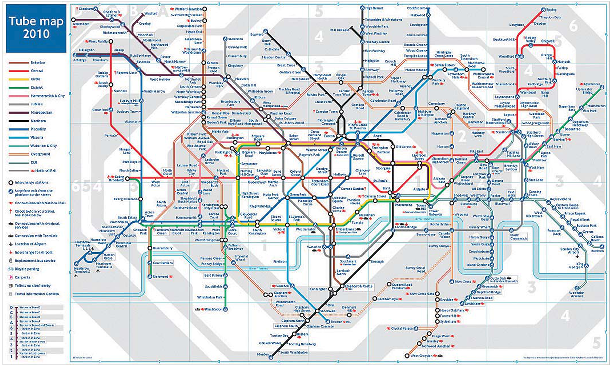
The London Underground map is based on the 1931 design by Harry Beck. The design has undergone many changes, moving from an accurately spaced to a schematic design, but the colors of the lines have changed little from Its first inception. Different colors for different lines enable passengers to trace easily the line that they need to travel on. Developed by engineer Harry Beck, it’s one of the most famous maps in city transport. Beck used color to differentiate lines, so that people could readily identify the right route. The map is schematic i.e. it’s a simplified diagram that uses abstract graphic elements (lines) to represent a complex real-world situation. This most original of designs is a model copied in various forms throughout the world, including the Paris and New York City metro systems.
The London Underground map has to be the most iconic use of a visual language that has truly stood the test of time, its simple use of colour, lines and space is what peeked my interest.
References:
Visual_language. (2014, March 13). Retrieved January 5, 2015, from wikipedia: http://en.wikipedia.org/wiki/Visual_languageDabner, D., Calvert, S., & Casey, A. (2012). The New Graphic Design School A Foundation Course in Principles and Practice. Wiley.
Image Reference:
brandnatter. (2012, September 19). Your County, Your Way – Monmouthshire County Council. Retrieved January 5, 2015, from hband.co: http://hband.co/2012/09/19/your-county-your-way-monmouthshire-county-council/
-
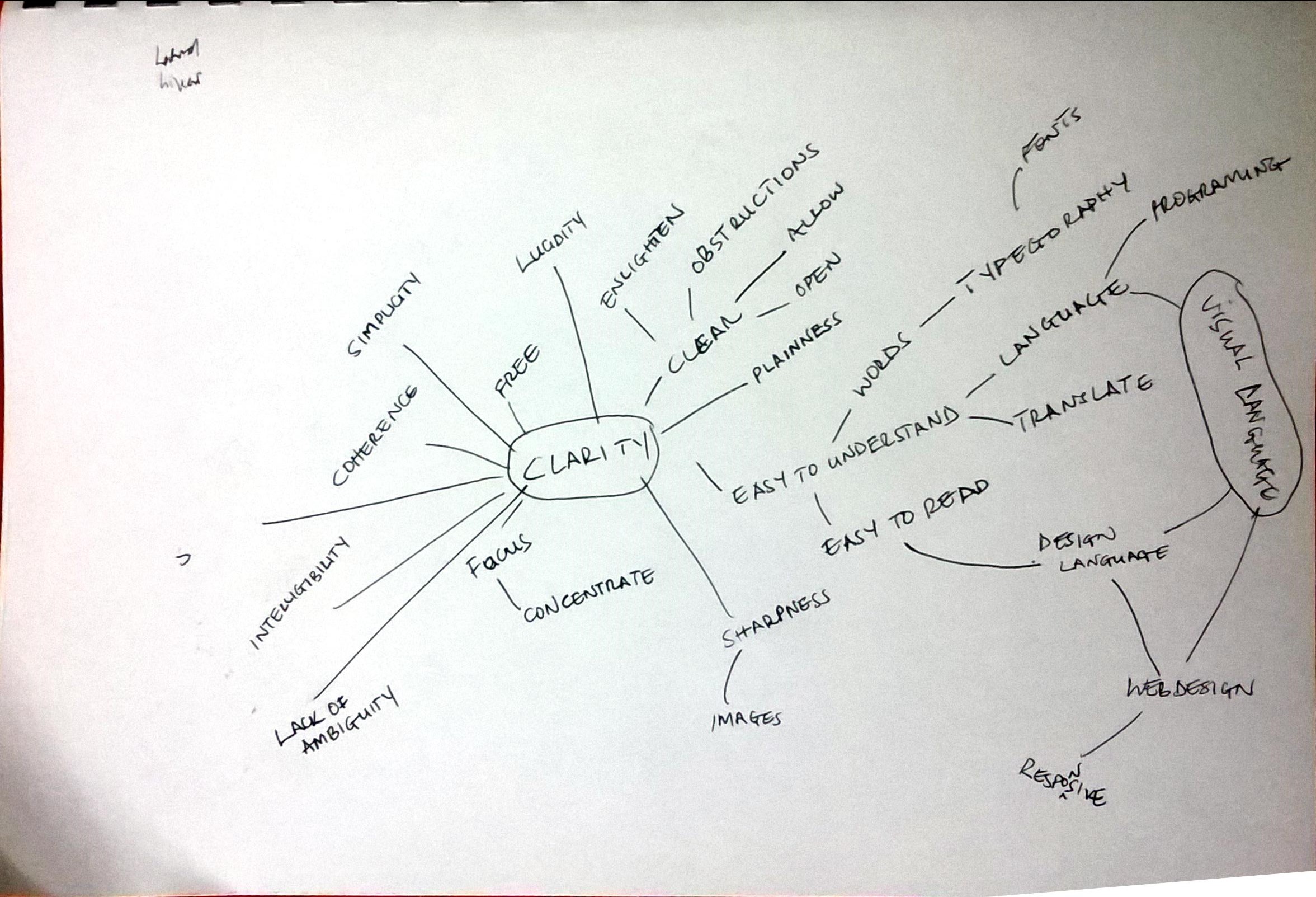
Brainstorming Clarity
My initial brainstorming took the form of a spider diagram of the word Clarity to allow for unexpected paths to open up. The aim of this process was to find connections and associations that then strengthen the concept. I aimed to try and come up with as many word associations as possible focusing more on how this could connect to visual design.
A design can communicate successfully, or be enhanced, through a number of visual strategies, depending on context. These range from highly pragmatic, where there needs to be as little ambiguity or opportunity for misunderstanding as possible – for example road signs, where clarity in message Is potentially a matter of life and death – to work that allows for a much more “poetic” approach – e.g. some editorial and arts projects, where subject matter invites interpretation, and where the designer has much more latitude in terms of Imagery and message.
I am considering the idea of Visual Languages i.e. systems of communication using visual elements that embrace clarity for further exploration and the possibility to produce some exiting practical work.
The next task will be to focus my brainstorm into this category and derive some potential project ideas.
-
Nation Branding – “a graphic negotiation with the past, present and future”
Its worth mentioning that in addition to their cultural history Nations are making increasingly conscious efforts to hone their country branding in recognition of the need to fulfil three major objectives i.e. To attract tourists, To stimulate inward investment and To boost exports.
Nation Branding can also increase currency stability; help restore international credibility and investor confidence; reverse international ratings downgrades; increase international political influence; stimulate stronger international partnerships and enhance nation building (by nourishing confidence, pride, harmony, ambition, national resolve).
For example Yvonne Johnston, CEO of the International Marketing Council of South Africa, describes how the South African brand has been developed in order to position the country in terms of its investment potential, credit worthiness, export opportunities, tourism potential and international relations (Dinnie, K. (14 May, 2010). Nation branding. Taylor and Francis).
-
Design: Solving Problems with the community
Alejandro Aravena: My architectural philosophy? Bring the community into the process
[ted id=2128]In this TED Talk Alejandro highlights several design projects he has worked on that called for participation from the communities in order to solve problems that affect them. In the talk, He says that, “participatory design is not a hippie, romantic, let’s-all-dream-together-about- the-future-of-the-city kind of thing… It is mainly trying to identify with precision what is the right question”.
What is the right question?
The talk more than anything showcases the Idea Sanders mentions in the article ‘Co-creation and the new landscapes of design.’ that the application of participatory design practices (both at the moment of idea generation and continuing throughout the design process at all key moments of decision) to very large-scale problems will change design and may change the world and could therefore be used effectively as a method/form of collective thinking and inquiry a designer could utilize in order to solve complex problems.
References:
Aravena, A. (2014, October). My architectural philosophy? Bring the community into the process. Retrieved December Sunday 28, 2014, from TEDGlobal 2014: http://www.ted.com/talks/alejandro_aravena_my_architectural_philosophy_bring_the_community_into_the_process
Sanders, E. B.-N., & Stappers, P. J. (2008, June 24). Co-creation and the new landscapes of design. CoDesign: International Journal of CoCreation in Design and the Arts, 4(1), 5-8.
