MA Graphic Design

  • TED Talk


    Matthew Carter: My life in typeface
    [ted id=1977]

    A ted talk about the connection between technology and design of type through the work of Type designer Matthew Carter. He talks about the effect of tools on form where Type is very adaptable. Unlike a fine art, such as sculpture or architecture, type hides its methods.

    The thing I design is manufactured, and it has a function: to be read, to convey meaning.
    Matthew Carter

    I like how Mathew takes us through his work with type, his ability to adapt like the thing (type) he designs to the ever changing technology and demands from his clients. this talk in my opinion, is a commentary on the design industry as a whole, designers are constantly adapting their methods and skillsets to ever-changing project needs and demands.

    References:

    Carter, M. (2014, March). My life in typeface. Retrieved December Sunday, 2014, from TED2014: http://www.ted.com/talks/matthew_carter_my_life_in_typefaces


  • History and Key elements: Participatory design

    History and Key elements: Participatory design


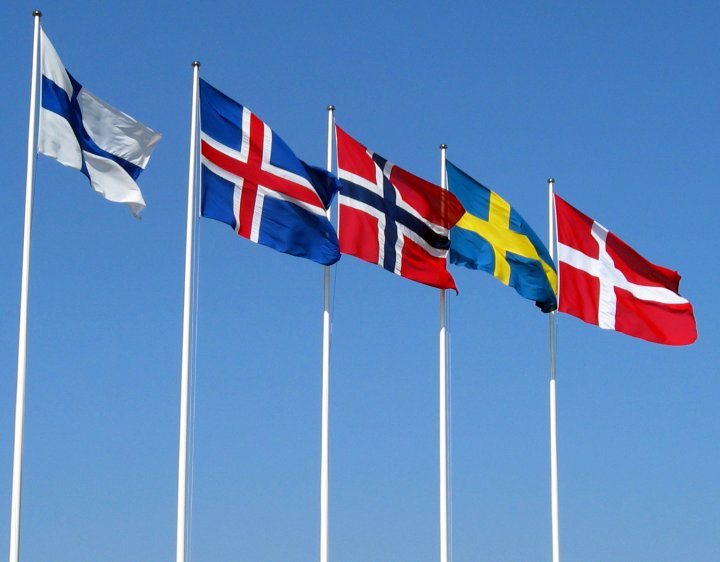
    Participatory design originated in Scandinavia in the 1970s and 1980s, motivated by a Marxist commitment to democratically empowering workers and fostering democracy in the workplace. It was avowedly political research aimed to form partnerships with labor unions that would allow workers to determine the shape and scope of new technologies introduced into the workplace.

    In early participatory design studies, workers tried to describe computer systems that could automate work while still valuing their craft skills and upholding their autonomy. But because workers had no experience in systems design, they could not begin to speculate on how to build such a system.

    What distinguishes participatory design from related approaches such as user-centered design is that the latter supposes only that the research and design work is done on behalf of the users; in participatory design, this work must be done with the users.

    Participatory design opposes the notion of a rationalist approach to design, which generally assumes that there is one best way to perform any activity. Theoretically, participatory design is founded on constructivism, a theory that explicitly resists the notion that knowledge can be completely formalized and classified that is to say, tacit knowledge which is implicit rather than explicit, holistic rather than bounded and systematized.

    Reference:
    Spinuzzi, C. (2005). The Methodology of Participatory Design. Technical Communication, 52(2), 163-174 (12).


  • Practice #1 Keyword – Clarity

    Practice #1 Keyword – Clarity


    The keyword I have chosen to explore for my practice one project is Clarity.

    The essence of the New Typography is Clarity. This puts it into deliberate opposition to the old typography whose aim was “beauty” and whose clarity did not attain the high level we require today.

    New Typography is distinguished from the old by the fact that its first objective is to develop its visible form out of the functions of the text. It is essential to give pure and direct expression to the contents of whatever is printed; just as in the works of technology and nature, “form” must be created out of function.

    The function of printed text is communication, emphasis (word value), and the logical sequence of the contents.

    I will begin with an examination of the word by asking and answering these simple questions:

    • What is ‘Clarity’?

    It is a noun meaning free from obscurity and easy to understand; the comprehensibility of clear expression (clarity – Wolfram|Alpha, 2014). First known use in English was approximately 1340 in the High Middle ages about 675 years ago with origins in Old French and Latine (clāritās).
    clarity

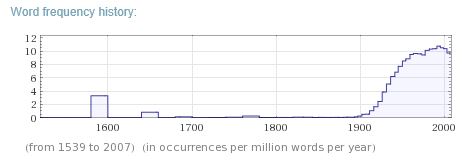
    According to the word frequency history data from Wolfram|Alpha, the word Clarity saw a steady increase in its usage from the 1900s which interestingly coincides with the new modern typographic movement with powerful advocates like Jan Tschichold the German typographer who in his 1928 seminal book The New Typography  wrote that clarity is necessary today because of the manifold claims for our attention made by the extraordinary amount of print, which demands the greatest economy of expression.

    • Why do we need ‘Clarity’?

    According to Jan Tschichold, we need Clarity in order to achieve clear and unambiguous form.

    The next step will be to look at different ways Clarity is used or achieved with the aim of choosing a direction with which to move forward with my practical work.

    Reference:
    Armstrong, H. (2009). Graphic Design Theory: Readings from the Field. New York. Princeton Architectural Press.
    clarity – Wolfram|Alpha. Retrieved October 27, 2014, from Wolfram|Alpha: http://www.wolframalpha.com/input/?i=clarit

  • The question: What is the role of the design professional?

    The question: What is the role of the design professional?


    During my research into participatory design, I found this question particularly interesting:

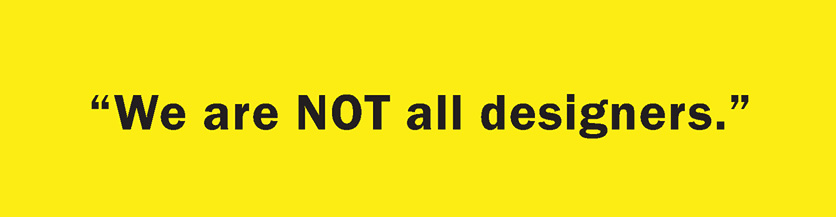
    if we are all designers, then why is a design professional required in participatory design? Why don’t the lay-people just do it on their own.

    From the book Sketching user experiences, Buxton puts forward that the role of the design professional, is to work with the users/customers/participants as a kind of combination coach/trainer, in order to help them come to an appropriate design solution themselves (The designer being more of a facilitator), in turn making everyone potential participants in the design process therefore acknowledging the richness of the design profession with the designer taking up the leadership role.

    reference:
    Buxton, Bill (2007) Sketching User Experiences: Getting the Design Right and the Right Design. Elsevier.


  • Themes and Ideas: Participatory Design Processes


    For my Research and Enquiry, I will focus on how “Participatory Design Processes” and user involvement are applied to Branding, Identity & Logo Design; Product and Packaging Design.

    In my research and practice, I hope to examine the opportunity to become a creative leader through contemporary models of creating and designing to produce work that invites participation from the user without alienating the designer.

    In the user-centered design process, we are focused on the thing being designed (e.g., the object, communication, space, interface, service, etc.), looking for ways to ensure that it meets the needs of the user.

    Reference:
    J.Frascara (Ed.) (2002) Design and the Social Sciences. Taylor & Francis Books Limited.