Noah Tarinyebwa

  • Brainstorming Clarity

    Brainstorming Clarity


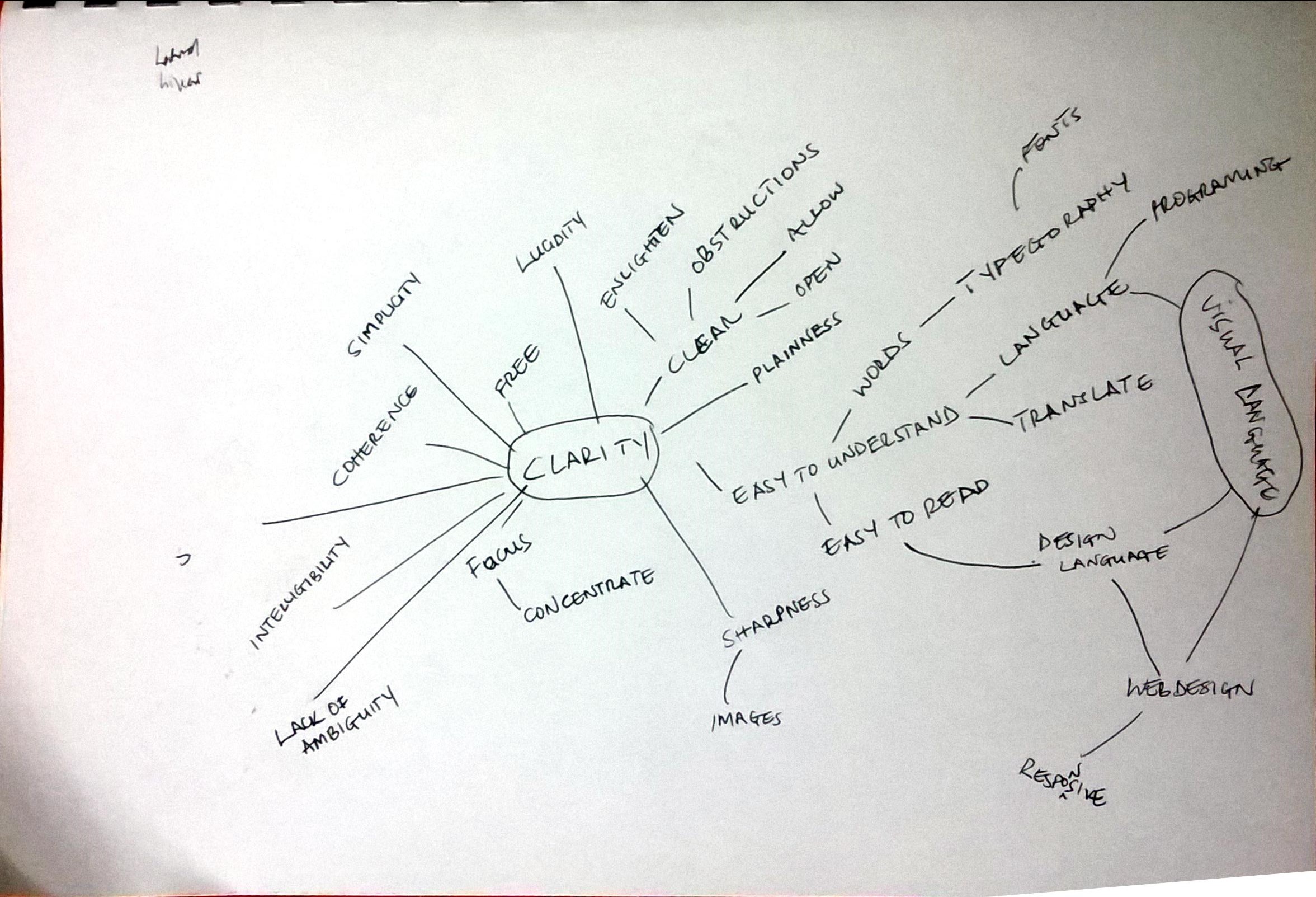
    My initial brainstorming took the form of a spider diagram of the word Clarity to allow for unexpected paths to open up. The aim of this process was to find connections and associations that then strengthen the concept. I aimed to try and come up with as many word associations as possible focusing more on how this could connect to visual design.

    A design can communicate successfully, or be enhanced, through a number of visual strategies, depending on context. These range from highly pragmatic, where there needs to be as little ambiguity or opportunity for misunderstanding as possible – for example road signs, where clarity in message Is potentially a matter of life and death – to work that allows for a much more “poetic” approach – e.g. some editorial and arts projects, where subject matter invites interpretation, and where the designer has much more latitude in terms of Imagery and message.

    I am considering the idea of Visual Languages i.e. systems of communication using visual elements that embrace clarity for further exploration and the possibility to produce some exiting practical work.

    The next task will be to focus my brainstorm into this category and derive some potential project ideas.

  • Nation Branding – “a graphic negotiation with the past, present and future”


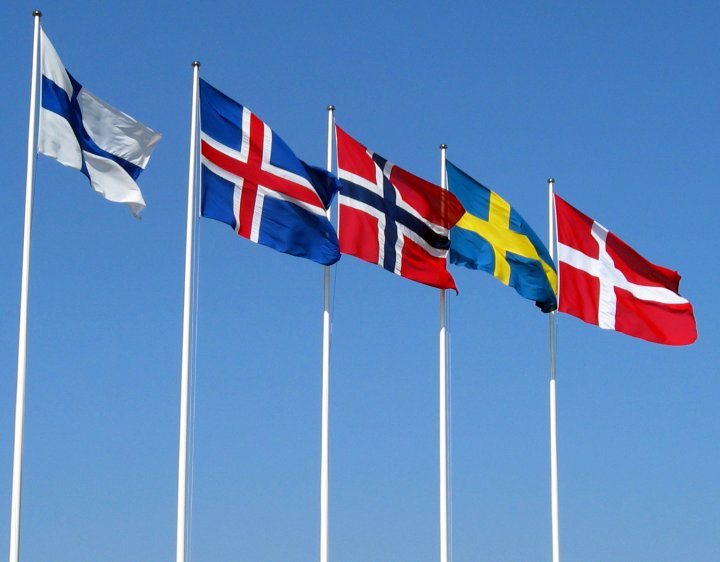
    Its worth mentioning that in addition to their cultural history Nations are making increasingly conscious efforts to hone their country branding in recognition of the need to fulfil three major objectives i.e. To attract tourists, To stimulate inward investment and To boost exports.

    Nation Branding can also increase currency stability; help restore international credibility and investor confidence; reverse international ratings downgrades; increase international political influence; stimulate stronger international partnerships and enhance nation building (by nourishing confidence, pride, harmony, ambition, national resolve).
    For example Yvonne Johnston, CEO of the International Marketing Council of South Africa, describes how the South African brand has been developed in order to position the country in terms of its investment potential, credit worthiness, export opportunities, tourism potential and international relations (Dinnie, K. (14 May, 2010). Nation branding. Taylor and Francis).


  • Design: Solving Problems with the community


    Alejandro Aravena: My architectural philosophy? Bring the community into the process
    [ted id=2128]

    In this TED Talk Alejandro highlights several design projects he has worked on that called for participation from the communities in order to solve problems that affect them. In the talk, He says that, “participatory design is not a hippie, romantic, let’s-all-dream-together-about- the-future-of-the-city kind of thing… It is mainly trying to identify with precision what is the right question”.

    What is the right question?

    The talk more than anything showcases the Idea Sanders mentions in the article ‘Co-creation and the new landscapes of design.’ that the application of participatory design practices (both at the moment of idea generation and continuing throughout the design process at all key moments of decision) to very large-scale problems will change design and may change the world and could therefore be used effectively as a method/form of collective thinking and inquiry a designer could utilize in order to solve complex problems.

    References:

    Aravena, A. (2014, October). My architectural philosophy? Bring the community into the process. Retrieved December Sunday 28, 2014, from TEDGlobal 2014: http://www.ted.com/talks/alejandro_aravena_my_architectural_philosophy_bring_the_community_into_the_process

    Sanders, E. B.-N., & Stappers, P. J. (2008, June 24). Co-creation and the new landscapes of design. CoDesign: International Journal of CoCreation in Design and the Arts, 4(1), 5-8.


  • TED Talk


    Matthew Carter: My life in typeface
    [ted id=1977]

    A ted talk about the connection between technology and design of type through the work of Type designer Matthew Carter. He talks about the effect of tools on form where Type is very adaptable. Unlike a fine art, such as sculpture or architecture, type hides its methods.

    The thing I design is manufactured, and it has a function: to be read, to convey meaning.
    Matthew Carter

    I like how Mathew takes us through his work with type, his ability to adapt like the thing (type) he designs to the ever changing technology and demands from his clients. this talk in my opinion, is a commentary on the design industry as a whole, designers are constantly adapting their methods and skillsets to ever-changing project needs and demands.

    References:

    Carter, M. (2014, March). My life in typeface. Retrieved December Sunday, 2014, from TED2014: http://www.ted.com/talks/matthew_carter_my_life_in_typefaces


  • History and Key elements: Participatory design

    History and Key elements: Participatory design


    Participatory design originated in Scandinavia in the 1970s and 1980s, motivated by a Marxist commitment to democratically empowering workers and fostering democracy in the workplace. It was avowedly political research aimed to form partnerships with labor unions that would allow workers to determine the shape and scope of new technologies introduced into the workplace.

    In early participatory design studies, workers tried to describe computer systems that could automate work while still valuing their craft skills and upholding their autonomy. But because workers had no experience in systems design, they could not begin to speculate on how to build such a system.

    What distinguishes participatory design from related approaches such as user-centered design is that the latter supposes only that the research and design work is done on behalf of the users; in participatory design, this work must be done with the users.

    Participatory design opposes the notion of a rationalist approach to design, which generally assumes that there is one best way to perform any activity. Theoretically, participatory design is founded on constructivism, a theory that explicitly resists the notion that knowledge can be completely formalized and classified that is to say, tacit knowledge which is implicit rather than explicit, holistic rather than bounded and systematized.

    Reference:
    Spinuzzi, C. (2005). The Methodology of Participatory Design. Technical Communication, 52(2), 163-174 (12).


  • Practice #1 Keyword – Clarity

    Practice #1 Keyword – Clarity


    The keyword I have chosen to explore for my practice one project is Clarity.

    The essence of the New Typography is Clarity. This puts it into deliberate opposition to the old typography whose aim was “beauty” and whose clarity did not attain the high level we require today.

    New Typography is distinguished from the old by the fact that its first objective is to develop its visible form out of the functions of the text. It is essential to give pure and direct expression to the contents of whatever is printed; just as in the works of technology and nature, “form” must be created out of function.

    The function of printed text is communication, emphasis (word value), and the logical sequence of the contents.

    I will begin with an examination of the word by asking and answering these simple questions:

    • What is ‘Clarity’?

    It is a noun meaning free from obscurity and easy to understand; the comprehensibility of clear expression (clarity – Wolfram|Alpha, 2014). First known use in English was approximately 1340 in the High Middle ages about 675 years ago with origins in Old French and Latine (clāritās).

    clarity

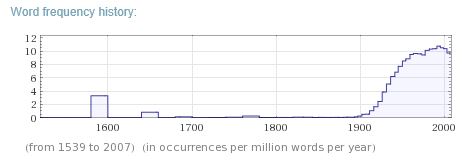
    According to the word frequency history data from Wolfram|Alpha, the word Clarity saw a steady increase in its usage from the 1900s which interestingly coincides with the new modern typographic movement with powerful advocates like Jan Tschichold the German typographer who in his 1928 seminal book The New Typography  wrote that clarity is necessary today because of the manifold claims for our attention made by the extraordinary amount of print, which demands the greatest economy of expression.

    • Why do we need ‘Clarity’?

    According to Jan Tschichold, we need Clarity in order to achieve clear and unambiguous form.

    The next step will be to look at different ways Clarity is used or achieved with the aim of choosing a direction with which to move forward with my practical work.

    Reference:
    Armstrong, H. (2009). Graphic Design Theory: Readings from the Field. New York. Princeton Architectural Press.
    clarity – Wolfram|Alpha. Retrieved October 27, 2014, from Wolfram|Alpha: http://www.wolframalpha.com/input/?i=clarit


  • The question: What is the role of the design professional?

    The question: What is the role of the design professional?


    During my research into participatory design, I found this question particularly interesting:

    if we are all designers, then why is a design professional required in participatory design? Why don’t the lay-people just do it on their own.

    From the book Sketching user experiences, Buxton puts forward that the role of the design professional, is to work with the users/customers/participants as a kind of combination coach/trainer, in order to help them come to an appropriate design solution themselves (The designer being more of a facilitator), in turn making everyone potential participants in the design process therefore acknowledging the richness of the design profession with the designer taking up the leadership role.

    reference:
    Buxton, Bill (2007) Sketching User Experiences: Getting the Design Right and the Right Design. Elsevier.


  • Themes and Ideas: Participatory Design Processes


    For my Research and Enquiry, I will focus on how “Participatory Design Processes” and user involvement are applied to Branding, Identity & Logo Design; Product and Packaging Design.

    In my research and practice, I hope to examine the opportunity to become a creative leader through contemporary models of creating and designing to produce work that invites participation from the user without alienating the designer.

    In the user-centered design process, we are focused on the thing being designed (e.g., the object, communication, space, interface, service, etc.), looking for ways to ensure that it meets the needs of the user.

    Reference:
    J.Frascara (Ed.) (2002) Design and the Social Sciences. Taylor & Francis Books Limited.


  • Wild Camp & Lodge

    Wild Camp & Lodge


    Logo Mark Deconstructed.

    The Acacia Tree

    Symbolizes the great African outdoor

    The Sitting Impala

    A symbol for the abundant wild life and the rest and relaxation provided at the camps & Lodge.


  • The Branding, Identity & Logo Design Process


    Depending on the workflow and personal preferences, The Logo design process usually goes through a process that can be applied to any design project.

    STEP 1: The Design Brief

    Conduct a questionnaire or interview with the client to get a design brief which will act as guide and capture important relevant information about your clients needs.

    Some questions in the questionnaire could include:

    • Sum up what you do?
    • Appropriate keywords and descriptive words or phrases?
    • Who is the target audience or intended market?
    • Are you unique or one of many?
    • Where will the logo be used?
    • What visual style of logos appeal to you?


    STEP 2: Research

    Conduct research focused on the industry itself; its history; and its competitors.

    STEP 3: Reference

    Conduct research into Branding, Identity & logo designs that have been successful and current styles and trends that are related to the design brief.

    STEP 4: Sketching & Conceptualizing

    Develop the Branding, Identity & logo design concept(s) around the brief and research.

    Here is where you use creativity and know how to design the Branding, Identity &/or logo.

    STEP 5: Reflection

    Remember to take breaks throughout the design process. This lets ideas mature and renew enthusiasm and receive feedback.

    STEP 6: Presentation

    Choose whether to present only a select few Branding, Identity & logo designs to the client or a whole collection.

    STEP 7: Celebration (Optional)

    Drink beer or eat chocolate or sleep or start on the next logo design. Or a combination.